Pneumatic Removal of Hot Rubber Parts After Vulcanization
A practical guide to releasing, gripping, and transferring hot molded rubber while managing adhesion, thermal limits, release-agent dosing, fumes, and press faults.
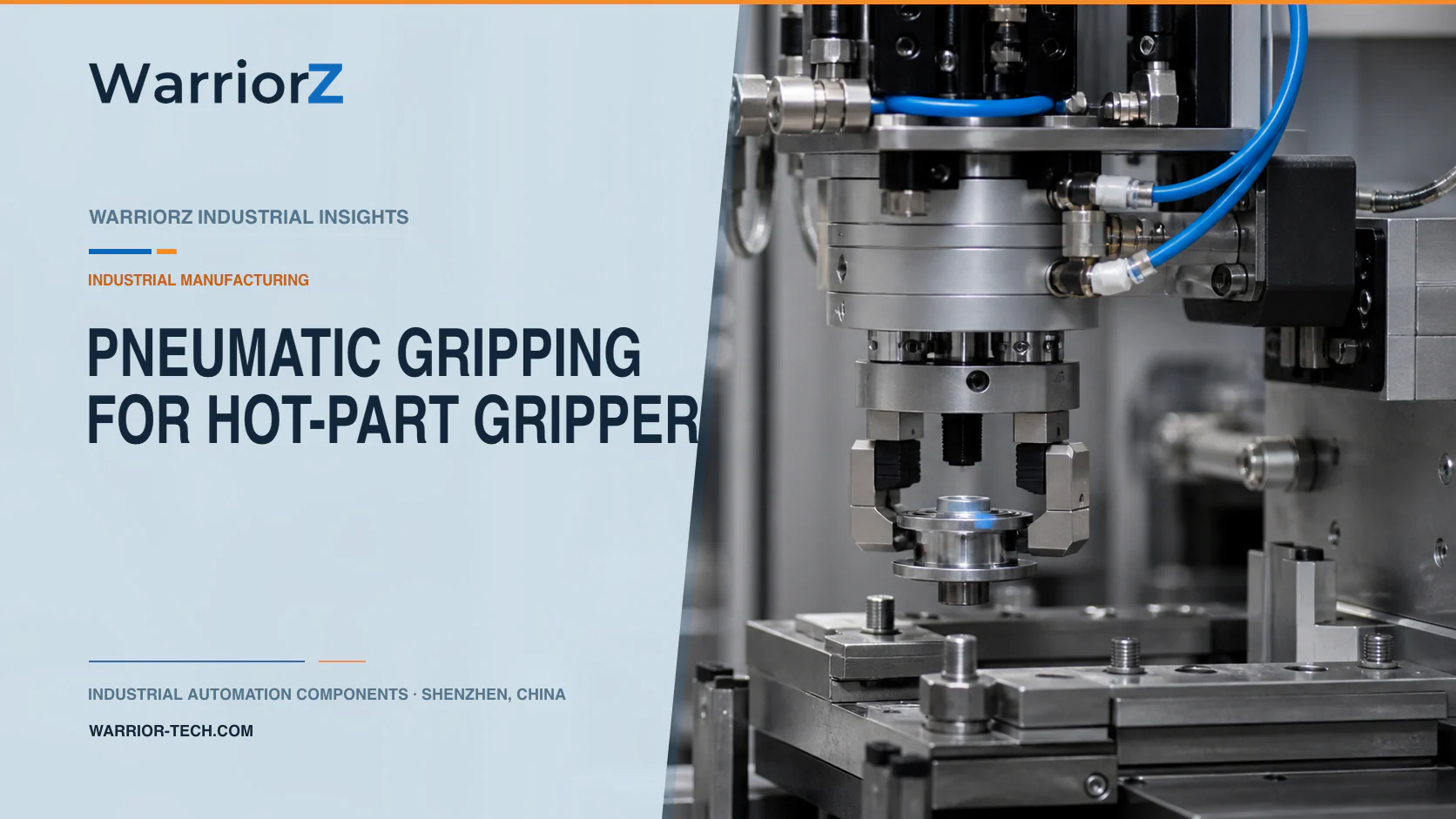
A rubber seal plant may open a compression mold, use ejectors to break the part free, grip the hot molding, and move it to cooling or deflashing. Pneumatic grippers can automate the transfer, while separate valves may meter approved mold-release material or air for a qualified cleaning step. Heat, oil mist, tacky rubber, and variable adhesion make this more demanding than gripping a cool rigid part.
WarriorZ supports maintenance and automation teams with pneumatic spare-part identification, product matching, and international supply. The rubber compound owner, press builder, industrial hygienist, and plant safety team must approve temperature limits, release agents, ventilation, grip method, and machine safeguards.
Define the hot part and mold-release condition
The application is a rubber seal manufacturing plant with compression molding and vulcanization. After the curing press reaches the defined open state, ejectors or a stripping mechanism release the part. A pneumatic gripper removes it and places it on a supported cooling or downstream fixture.
Record compound, part mass, geometry, temperature at pickup, cooling rate, surface tack, permitted grip zones, mold-release chemistry, flash, and adhesion range. Adhesion can vary with cure condition, mold finish, contamination, release-agent amount, and time since opening. Treat it as a process input rather than adding unlimited gripper force.
Input condition | Effect on takeout | Required check |
|---|---|---|
High part temperature | Lower stiffness and greater marking risk | Temperature and cooled dimensions |
High mold adhesion | Larger peel or extraction force | Ejector and release-process evidence |
Oily or tacky surface | Changing friction at the fingers | Slip trials and pad inspection |
Thin flash or small features | Tearing or incomplete pickup | Approved contact geometry |
Mold-release buildup | Deposits on tooling and gripper | Metering and cleaning record |
Compound change | Different stiffness, cure, and fumes | Controlled requalification |
Separate release force from gripping force
Use mold ejectors, peel features, or a dedicated stripping mechanism to break adhesion where practical. The gripper should control the released part. Pulling a fully adhered molding with high jaw force can stretch the product, tear thin sections, overload fingers, or lift against a press mechanism.
Establish a release sequence that minimizes peel stress and keeps the part supported. If the gripper contributes to stripping, calculate and test both normal grip and extraction loads, including finger offset and moments. Define the maximum approved adhesion condition; stop and investigate beyond it.
Festo's official HGRT radial-gripper datasheet publishes product-specific gripping, load, temperature, sensing, and operating information. It is useful as a selection example, but its documented limits must be checked at the gripper body and sensor location. A hot part can transfer heat through custom fingers even when ambient air seems acceptable.
Design fingers for heat, tack, and cooled geometry
Use finger materials and contact shapes compatible with the rubber compound, release agent, temperature, and cleaning process. Contact robust, nonfunctional regions. Avoid sealing lips, precision faces, and uncured or easily distorted features unless the product engineer approves them.
Thermal isolation between hot custom fingers and the gripper may reduce heat transfer, but it also changes stiffness and jaw offset. Check moments, fasteners, and repeatability. Measure steady-state component temperatures after realistic consecutive cycles, not only after one pickup.
Pads can absorb oil or release agent and change friction. Smooth metal may be easier to clean but can slip or mark. Choose from trials and define replacement criteria. Inspect the final cooled product for dimensions, tears, impressions, surface contamination, and functional results.
Sequence press opening, release, grip, and transfer
The takeout enters only after the press and mold reach the machine-defined state. Confirm part presence and permitted temperature or cure state. Activate ejectors or release motion, close the gripper on the approved zone, verify control of the part, and withdraw through a clear path.
Sequence state | Required confirmation | Fault response |
|---|---|---|
Cure cycle complete | Approved recipe and press state | Keep takeout outside |
Mold open | Mechanical clearance and safeguarding permission | Inhibit gripper entry |
Part released | Ejector or stripping state accepted | Do not pull with added jaw force |
Grip established | Jaw position and qualified load evidence | Keep mold motion inhibited |
Takeout withdraws | Part remains controlled and path clear | Stop in risk-assessed state |
Part supported | Cooling fixture or conveyor accepts the load | Do not open gripper |
Tool clear | Ejectors, gripper, and spray device retracted | Prevent press closing |
Do not use one timer as proof that a sticky part released. Track ejector position, gripper travel, extraction motion, and known fault signatures. Preserve cavity and part identity when a takeout fails.
Meter release agent and cleaning air deliberately
Use only the mold-release product and application method approved by process engineering and the safety data sheet. Define dose, spray pattern, frequency, ventilation state, and confirmation. More release agent can contaminate the product, mold, gripper, or downstream process and may change workplace exposure.
A short air pulse can move loose debris in a qualified enclosed setup, but uncontrolled blowing can aerosolize residues, drive contamination into vents, raise noise, and spread hot particles. Prefer capture and mechanical process design where appropriate. Interlock spraying or blowing with the mold, extraction, and access states.
NIOSH's official Rubber Products Manufacturing Industry hazard review describes the mixture of dusts, gases, vapors, fumes, and chemical byproducts that may occur during heating and processing rubber. It supports an industrial-hygiene evaluation; it does not define one universal ventilation rate or release-agent recipe.
Control heat, fumes, fire, and press hazards
Assess hot molds and parts, press closing, ejectors, gripper pinch points, dropped parts, stored air, unexpected restart, and chemical exposure. Ventilation and fire controls must come from the actual compounds, release agents, process, and jurisdiction. Do not assume pneumatic equipment is automatically suitable for a flammable atmosphere.
ISO 4414:2010 covers pneumatic-system safety. Determine what happens to a hot part if air or power is lost during withdrawal. Provide support or retention as required. A gripper with trapped air can still leak; an exhausted circuit can still leave gravity and press energy.
Before entering the mold area, isolate and control every hazardous energy source under the approved procedure. Secure ejectors, takeout axes, and suspended tooling. Let components cool or use appropriate handling controls.
Validate compounds, heat soak, and credible faults
Run all approved compounds, cavity positions, part sizes, cure recipes, mold temperatures, release-agent conditions, and pickup delays. Include consecutive production cycles to reach gripper thermal equilibrium, the highest approved adhesion, minimum grip friction, worn fingers at service limits, and minimum air supply.
Measure component temperatures, jaw position, extraction force or behavior where applicable, slip, cooled dimensions, surface marks, tears, contamination, and takeout time. Challenge a stuck part, incomplete ejector motion, wrong compound recipe, failed sensor, contaminated fingers, excessive spray, blocked extraction, low pressure, valve fault, and interrupted transfer.
For the next rubber-production handling problem, see controlled pneumatics for green tire loading. To review grippers, cylinders, valves, and sensing from approved part and hygiene data, send a WarriorZ vulcanization takeout inquiry.
Official sources
Sources and verification basis
These references support the documented facts, calculations, or engineering boundaries used in this article.